The Best Countries for Digital Nomads: A Guide to Visas, Costs, and Connectivity
Discover the 10 best countries for digital nomads. Explore visa options, cost of living, and internet speeds to plan your next remote work adventure.
The best countries for digital nomads offer a compelling mix of visa accessibility, fast internet, affordable living, and vibrant communities. Success as a remote professional depends on managing complex logistics, from visa days to tax residency. This is where a privacy-first tool becomes indispensable, helping you track your travels automatically and accurately. This guide provides a detailed roundup of top destinations, showing you how DaysAround can help manage your journey.
The DaysAround iOS App helps you build a secure, on-device timeline of your travels by automatically detecting countries from your photos—without GPS or cloud storage. It acts as your personal country counter and travel history app, simplifying compliance whether you’re navigating the Schengen 90/180-day rule in Europe or tracking your stay for a long-term visa. For manual planning, our free Schengen Zone Calculator is a great tool, but the app automates the entire process. We will explore each country's unique offerings, ensuring you have the practical details to choose your next base and stay compliant.
Understanding the various visa options is key, and many countries offer specific arrangements such as business visas for remote professionals. Throughout this guide, we'll demonstrate how tools like the DaysAround app and its free Schengen Zone Calculator can help you confidently manage these requirements.
1. Portugal: The Gateway to Europe for Long-Term Digital Nomads
Portugal has solidified its reputation as one of the best countries for digital nomads, offering a compelling blend of affordability, excellent weather, and a welcoming atmosphere. Its strategic position within the Schengen Area makes it an ideal base for exploring Europe while managing visa limitations. The country caters to remote workers with a robust infrastructure, including numerous co-working spaces and strong communities in cities like Lisbon and Porto.
Visa and Residency
Portugal offers the popular Digital Nomad Visa (D8), which allows remote workers to reside in the country for one year, with the possibility of renewal. To qualify, you must prove a monthly income of at least four times the Portuguese minimum wage (around €3,280 as of late 2023). For shorter stays, non-EU citizens can enter for 90 days within any 180-day period under Schengen rules, making it a perfect starting point for European travel.
Cost of Living and Connectivity
The monthly cost of living for a single nomad in Lisbon or Porto typically ranges from €1,500 to €2,500. Internet speeds are reliable, with widespread fiber optic coverage ensuring fast connections for work. For instant connectivity upon arrival without the hassle of finding a local SIM, it's wise to get an eSIM for Portugal before you land.
How DaysAround Helps in Portugal
- Schengen Compliance: Portugal is a fantastic base for exploring the Schengen Zone. Use our free Schengen Zone Calculator to plan multi-country trips without overstaying your 90/180-day limit.
- Automated Tracking: For effortless compliance, the DaysAround app automatically builds a private, on-device travel timeline from your photos. It helps you accurately track your days in Portugal and other Schengen countries, which is crucial for visa and tax residency purposes.
2. Mexico: Affordability and Proximity for Americas-Based Nomads
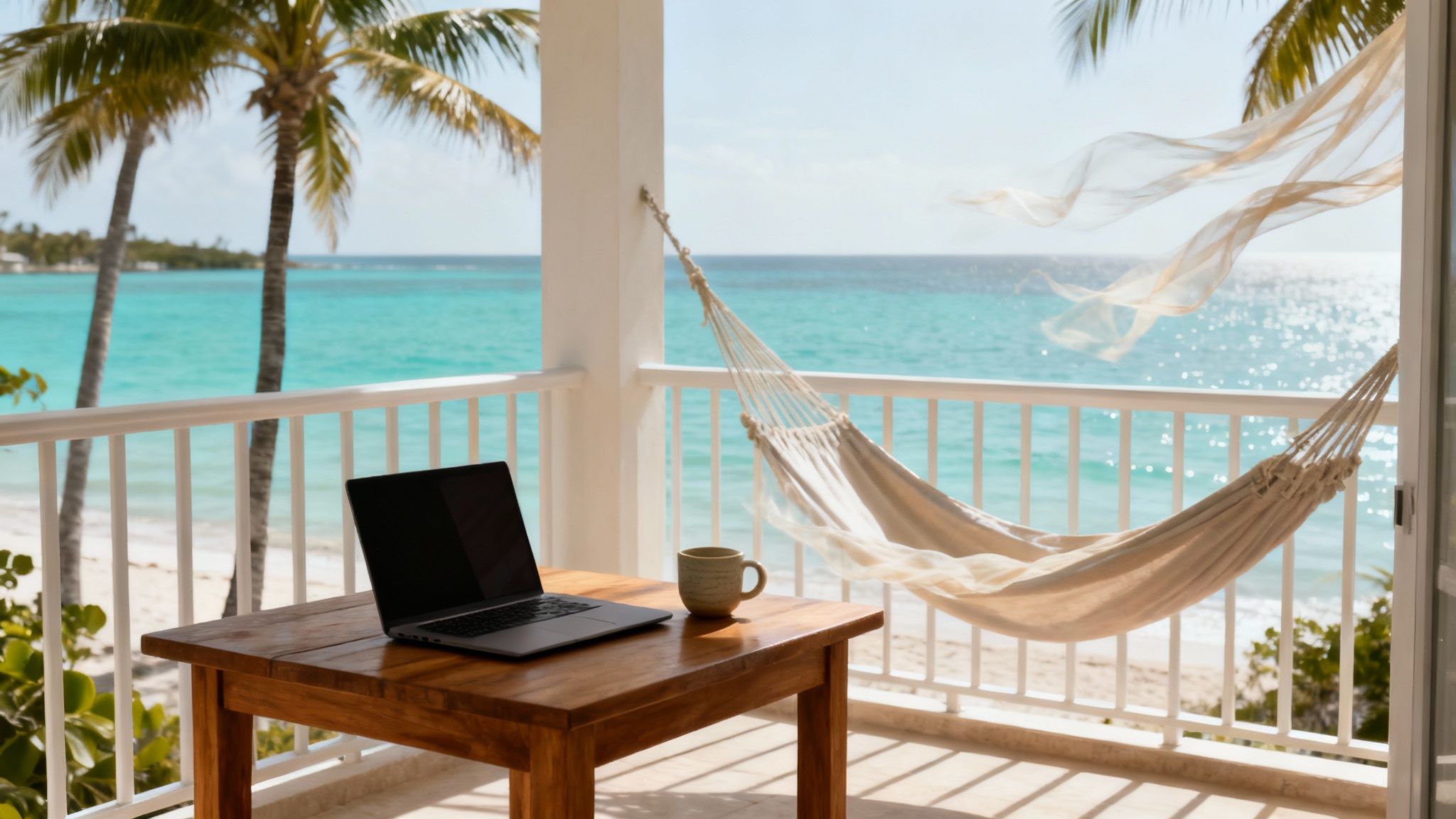
Mexico offers digital nomads an unbeatable combination of low costs, rich culture, and reliable internet, especially in its major cities. Its proximity to North America makes it a convenient and popular choice for remote workers from the US and Canada. With established nomad hubs in Mexico City, Oaxaca, and Playa del Carmen, the country provides diverse lifestyles, from bustling urban centers to relaxed beach towns, making it one of the best countries for digital nomads in the Americas.
Visa and Residency
Mexico is highly accessible, offering a 180-day visitor permit (FMM) on arrival for many nationalities, which is often sufficient for short-term stays. For longer-term nomads, the Temporary Resident Visa is ideal. It allows you to stay for one year and is renewable for up to three more. To qualify, you typically need to show a monthly income of around $3,200 USD or have significant savings. This visa must be applied for at a Mexican consulate outside of Mexico.
Cost of Living and Connectivity
The monthly cost of living for a single nomad can range from $1,200 to $2,000, depending on the city and lifestyle. Major hubs like Mexico City and Playa del Carmen offer excellent internet infrastructure with widespread fiber optic availability. While you can easily purchase a local SIM card upon arrival, getting an eSIM for Mexico beforehand can provide instant, hassle-free connectivity the moment you land.
How DaysAround Helps in Mexico
- Visa Tracking: Use the DaysAround app to log your entry and exit dates. This creates an accurate, on-device timeline from your photos, which is crucial for managing your 180-day visitor permit or tracking your time for Temporary Resident Visa renewals and tax residency purposes.
- Regional Exploration: Mexico's size and diversity invite extensive travel. The app helps document your movements between states and cities like Oaxaca and Mérida, creating a private record of your journey without needing GPS or cloud services.
3. Thailand: Affordable Southeast Asian Hub with Digital Nomad Infrastructure
Thailand has long been a cornerstone destination for remote workers, making it one of the best countries for digital nomads. It offers an unbeatable mix of exceptional affordability, established infrastructure, and a deeply rooted nomad community. Major hubs like Chiang Mai and Bangkok provide reliable internet, a vast range of accommodation, and serve as perfect gateways for exploring the rest of Southeast Asia.

Visa and Residency
Thailand's visa situation is dynamic, but options are available for nomads. Many start with a 60-day Tourist Visa, which can often be extended for another 30 days in-country. The recently introduced Long-Term Resident (LTR) visa has a "Work-From-Thailand Professional" category, though it has high income requirements. For most, managing stays involves visa runs or leveraging visa exemption periods, making careful day tracking essential.
Cost of Living and Connectivity
The monthly cost of living is a major draw, with a single nomad living comfortably in Chiang Mai for €800 to €1,500, or slightly more in Bangkok. Internet is fast and widely available, especially in nomad hubs, with numerous cafes and co-working spaces offering gigabit speeds. An eSIM for regional travel is a practical choice for staying connected across Southeast Asia.
How DaysAround Helps in Thailand
- Automated Tracking: The DaysAround app is invaluable for this. It privately builds your travel timeline from your photos, creating a precise country counter and record of your days in Thailand and neighboring countries. This helps you monitor visa validity and plan your next move with confidence.
- Tax Residency Awareness: If you spend over 183 days in Thailand within a calendar year, you may become a tax resident. Use a reliable travel history app like DaysAround to monitor your day count and understand your potential tax obligations.
4. Spain: Vibrant Culture and Schengen Accessibility for European-Based Nomads
Spain presents a compelling package for remote workers, blending a vibrant Western European lifestyle with relatively affordable living costs and excellent infrastructure. Its full integration into the Schengen Zone makes it an ideal launchpad for exploring the continent. Cities like Barcelona, Valencia, and Madrid have become major hubs, offering robust digital nomad communities, reliable high-speed internet, and a rich cultural backdrop that solidifies Spain's place as one of the best countries for digital nomads.

Visa and Residency
Spain’s Digital Nomad Visa allows non-EU citizens to live and work remotely in the country for one year, with renewals possible for up to five years. The minimum monthly income requirement is set at 200% of the Spanish minimum interprofessional salary (SMI), which is approximately €2,646 as of late 2023. For shorter trips, non-EU nationals can stay for up to 90 days in any 180-day period under standard Schengen rules, perfect for those testing the waters.
Cost of Living and Connectivity
The monthly cost of living for a single nomad can range from €1,700 to €2,800, depending on the city, with Valencia being more affordable than Barcelona or Madrid. Spain boasts widespread fiber optic internet, ensuring stable and fast connections for demanding work tasks. Mobile connectivity is also excellent, making it easy to stay online while traveling between regions.
How DaysAround Helps in Spain
- Schengen Day Counting: As a Schengen member, every day in Spain counts toward your 90/180-day limit. Use our free Schengen Zone Calculator to manually plan trips to neighboring countries like France or Italy without risking an overstay.
- Automated Travel Timeline: For precise and private tracking, the DaysAround app automatically logs your days in Spain and any other country you visit. It creates a secure, on-device travel history from your photos, which is essential for managing your Schengen allowance and documenting your stay for tax residency purposes. For visa runs, you might explore some great non-Schengen countries to reset your Schengen clock.
5. Colombia: Rising Destination with Visa-Free Access and Low Costs
Colombia has rapidly become one of the best countries for digital nomads, celebrated for its low cost of living, vibrant culture, and stunning biodiversity. Major cities like Medellín and Bogotá offer a growing infrastructure for remote workers, including countless cafes and co-working spaces. For many nationalities, visa-free entry makes it an accessible and excellent base for exploring the rest of South America.
Visa and Residency
Most nationalities, including those from the US, UK, and EU, can enter Colombia visa-free for up to 90 days. This can typically be extended for another 90 days, allowing a total stay of 180 days per calendar year. While Colombia has launched a Digital Nomad Visa, the generous visa-free policy is often sufficient for short-to-medium-term stays, making it a hassle-free option for many remote professionals.
Cost of Living and Connectivity
The monthly cost for a single nomad in cities like Medellín or Bogotá is remarkably affordable, generally ranging from €800 to €1,500. Internet connectivity is strong and reliable in urban centers, with widespread fiber optic availability, ensuring you can work efficiently. Popular nomad hubs like Medellín's El Poblado or Laureles neighborhoods are well-equipped to meet remote work demands.
How DaysAround Helps in Colombia
- 180-Day Rule Tracking: Colombia's 180-day per calendar year rule requires careful tracking, especially if you plan multiple entries or extensions. Miscalculating your stay can lead to fines or entry issues.
- Automated Travel Timeline: Use the DaysAround app to automatically build a private, on-device travel history. It helps you accurately monitor your days spent in Colombia, ensuring you comply with the 180-day limit and have a clear record for any future visa applications or tax residency questions.
6. Vietnam: Emerging Tech Hub with Ultra-Affordable Living and E-Visa Convenience
Vietnam has rapidly become a hotspot for digital nomads, especially those seeking an unbeatable combination of extremely low living costs, a dynamic culture, and a burgeoning tech scene. It serves as a strategic and affordable base for exploring Southeast Asia. Major cities like Ho Chi Minh City and Da Nang offer reliable infrastructure, a massive expatriate community, and the energetic atmosphere that makes it one of the best countries for digital nomads on a budget.
Visa and Residency
Vietnam's visa policies have become increasingly nomad-friendly. The country offers a 90-day e-visa for citizens of many countries, which simplifies entry and allows for a substantial stay. This e-visa can be single or multiple-entry, providing flexibility for those who want to explore neighboring countries like Thailand, Cambodia, and Laos. While Vietnam does not have a formal digital nomad visa, the 90-day e-visa and the practice of "visa runs" make longer stays feasible.
Cost of Living and Connectivity
The monthly cost of living for a single nomad is exceptionally low, typically ranging from €700 to €1,200, even in major hubs like Ho Chi Minh City or Hanoi. Internet connectivity is surprisingly robust in urban areas, with high-speed fiber optic available in most apartments and co-working spaces. Public Wi-Fi is also widespread in cafes, which are a cornerstone of Vietnamese work culture.
How DaysAround Helps in Vietnam
- E-Visa Tracking: The 90-day e-visa limit is strict. It's crucial to accurately track your days in the country to plan border runs or departures without risking overstay penalties.
- Automated Timeline: Use the DaysAround app to automatically log your entry and exit dates. It creates a private, on-device travel history from your phone's photos, giving you an exact country counter and helping you manage your visa duration effortlessly.
7. Germany: Stable Infrastructure and Digital Nomad Visa for Europe-Based Professionals
Germany stands out as a top European destination for digital nomads, offering a powerful combination of a robust economy, world-class infrastructure, and a high quality of life. Its central location and membership in the Schengen Area make it a strategic base for professionals looking to access European markets and travel extensively. Major cities like Berlin, Munich, and Hamburg have burgeoning startup scenes and strong communities for remote workers.
Visa and Residency
Germany offers a specific Digital Nomad Visa, officially known as a residence permit for self-employment or freelance work. Applicants must demonstrate sufficient funds to support themselves, provide proof of relevant client work, and have German health insurance. This visa typically allows you to reside in Germany for up to three years and can be a pathway to permanent residency. Proper documentation of your business registration is crucial for approval and renewal.
Cost of Living and Connectivity
The monthly cost for a single nomad in a major German city like Berlin is approximately €2,000 to €3,000. While more expensive than some other European hubs, the cost is justified by the high standard of living and reliable services. Germany boasts excellent internet infrastructure with fast, widely available fiber-optic and 5G connections, ensuring you stay productive and connected.
How DaysAround Helps in Germany
- Schengen Zone Travel: Based in Germany, you can easily travel across the Schengen Area. Use our free Schengen Zone Calculator to plan your trips and ensure you adhere to the 90/180-day rule.
- Automatic Day Counting: To simplify compliance and tax residency tracking, the DaysAround app automatically creates a private, on-device travel timeline from your photos. This is essential for accurately monitoring your days spent within and outside the Schengen zone, which is vital for both visa and German tax residency requirements (often triggered after 183 days).
8. Indonesia: Island-Hopping Paradise with Extended Tourist Visas and Minimal Costs
Indonesia is a legendary destination for budget-conscious nomads, offering an unbeatable combination of tropical paradise, vibrant culture, and extreme affordability. The island of Bali, with its established hubs in Canggu and Ubud, provides a mature infrastructure of co-working spaces, reliable internet, and a massive international community. This makes Indonesia an ideal base for exploring Southeast Asia and a top contender for the best countries for digital nomads.
Visa and Residency
Indonesia is rolling out a "Second Home" visa and has long offered the B211A Social/Tourist Visa, which allows for an initial 60-day stay and can be extended twice for 60 days each, totaling 180 days. This visa is a popular choice for long-term stays without committing to residency. Careful tracking of your entry and exit dates is essential to remain compliant and plan any necessary border runs to neighboring countries like Malaysia or East Timor.
Cost of Living and Connectivity
The monthly cost of living for a single nomad in Bali can range from €900 to €1,800, making it one of the most affordable options globally. Internet is generally reliable in major nomad areas like Bali and Jakarta, with fiber-optic connections widely available in cafes and co-working spaces. Getting a local SIM card upon arrival is straightforward and provides cheap, high-speed mobile data.
How DaysAround Helps in Indonesia
- Visa Day Counting: Staying compliant with the B211A visa and its extensions requires precise day counting. Planning your 180-day stay and any border runs is critical to avoid overstay penalties.
- Automated Trip Logging: Use the DaysAround app to automatically create a private travel timeline. It helps you accurately log your 60-day visa periods and documents your movements between islands like Bali, Lombok, and Java, providing a comprehensive travel history for any future visa applications.
9. Georgia: Underrated Schengen-Adjacent Gem with One-Year Visas and Bridging Advantage
Georgia has rapidly emerged as a haven for digital nomads, celebrated for its incredibly liberal visa policy, low cost of living, and stunning landscapes. Positioned at the crossroads of Europe and Asia, it offers a unique cultural blend and serves as a strategic base for travelers managing their time in the nearby Schengen Area. Cities like Tbilisi and Batumi have burgeoning remote work scenes with reliable infrastructure and welcoming communities, making it one of the best countries for digital nomads seeking long-term stability without complex bureaucracy.
Visa and Residency
Georgia's standout feature is its visa-free regime, allowing citizens of 95+ countries to stay for a full 365 days upon arrival. This policy is one of the most generous in the world and requires no pre-application or income proof. This simplicity removes a significant barrier for nomads, allowing them to settle in for a year and even use Georgia as a strategic "bridge" location while their Schengen 90/180-day clock resets.
Cost of Living and Connectivity
The cost of living is exceptionally low, with a single nomad able to live comfortably in Tbilisi for €800 to €1,500 per month. Internet infrastructure has improved significantly, with major cities offering fast fiber-optic connections suitable for demanding remote work. Co-working spaces are plentiful and affordable, providing excellent networking opportunities.
How DaysAround Helps in Georgia
- Schengen Strategy: Georgia's location is perfect for managing Schengen compliance. After spending 90 days in the Schengen Zone, you can live and work in Georgia for the required 90 days out before re-entering Europe.
- Effortless Day Tracking: Use the DaysAround app to automatically and privately track your entire one-year stay in Georgia. It builds an on-device timeline from your photos, creating an accurate record essential for any future visa or residency needs. It's also invaluable for monitoring your cumulative days in the Schengen Area if you take side trips.
10. Costa Rica: Environmental Paradise with Renewable Visa Options and Central American Access
Costa Rica has emerged as a premier destination for digital nomads, celebrated for its political stability, breathtaking biodiversity, and "Pura Vida" lifestyle. This Central American nation offers a perfect blend of adventure and practicality, with reliable infrastructure in hubs like San José and coastal towns such as Tamarindo. It serves as an excellent, secure base for remote workers looking to explore the wider region.
Visa and Residency
Costa Rica offers a dedicated Digital Nomad Visa ("Rentista"), allowing remote workers to stay for two years with the option to renew. Applicants must prove a stable monthly income of at least $3,000 USD for an individual or $4,000 for a family. For shorter trips, many nationalities can enter visa-free for 90 days, making it an accessible starting point for Central American travel.
Cost of Living and Connectivity
The monthly cost of living for a single nomad in Costa Rica generally falls between $1,800 and $3,000, depending on location and lifestyle. Major cities and tourist areas boast reliable high-speed internet, essential for uninterrupted work. While local SIM cards are available, an eSIM for Costa Rica provides immediate connectivity upon arrival, simplifying your initial setup.
How DaysAround Helps in Costa Rica
- Automated Day Counting: Use the DaysAround app to automatically log your days in Costa Rica and other Central American countries. This private, on-device timeline is crucial for managing your 90-day tourist stay or documenting your presence for Rentista visa renewals.
- Tax Residency Awareness: Staying over 183 days can trigger tax residency. The app provides a precise country counter, helping you monitor your physical presence to avoid unintended tax obligations.
Top 10 Countries for Digital Nomads — Comparison
| Country | Visa Ease | Avg. Monthly Cost | Internet Speed | Key Benefit |
|---|---|---|---|---|
| Portugal | Digital Nomad Visa (D8) | €1,500 - €2,500 | Very Good | Schengen access & quality of life |
| Mexico | 180-day visitor permit | $1,200 - $2,000 | Good | Proximity to US & low cost |
| Thailand | 60-day visa + extensions | €800 - €1,500 | Very Good | Established nomad hubs & low cost |
| Spain | Digital Nomad Visa | €1,700 - €2,800 | Excellent | Schengen access & vibrant culture |
| Colombia | 90-day visa-free (extendable) | €800 - €1,500 | Good | Low cost & easy entry |
| Vietnam | 90-day e-visa | €700 - €1,200 | Good | Extremely low cost & simple visa |
| Germany | Digital Nomad Visa | €2,000 - €3,000 | Excellent | Strong economy & EU base |
| Indonesia | B211A visa (up to 180 days) | €900 - €1,800 | Good | Tropical lifestyle & affordability |
| Georgia | 1-year visa-free | €800 - €1,500 | Good | Long-term stay & Schengen bridge |
| Costa Rica | Digital Nomad Visa | $1,800 - $3,000 | Good | Nature & political stability |
FAQ: Best Countries for Digital Nomads
1. What makes a country good for digital nomads? A great digital nomad country combines several key factors:
- Visa Ease: Simple, long-term visa options or generous visa-free stays.
- Cost of Living: Affordable accommodation, food, and transport.
- Internet Quality: Fast, reliable, and widely available internet.
- Community: An established community of other nomads and expats.
- Safety and Stability: A secure environment with reliable infrastructure.
2. Which countries have specific digital nomad visas? Many countries have introduced specific visas, including Portugal, Spain, Germany, and Costa Rica. These typically require proof of remote income and health insurance.
3. How do I track my days in the Schengen Area? You can stay in the Schengen Zone for 90 days within any 180-day period. You can manually track this using our free Schengen Zone Calculator. For automated, private tracking, the DaysAround iOS app builds a travel timeline from your photos, calculating your stay automatically.
4. How can I manage tax residency while traveling? Tax residency is often determined by the number of days you spend in a country in a year (usually over 183 days). Using an app like DaysAround to create an accurate, private record of your travel history is crucial for monitoring your day count and avoiding unintended tax obligations.
5. Are non-Schengen countries in Europe a good option? Yes, countries like Georgia are excellent non-Schengen options. They allow you to "reset" your Schengen 90/180-day clock while offering a low cost of living and simple visa rules.
6. What is the cheapest country for digital nomads? Countries in Southeast Asia like Vietnam and Thailand are often cited as the most affordable, with monthly costs potentially below €1,000. Georgia and Colombia also offer very low living costs.
7. How does the DaysAround app track my travel without GPS? The DaysAround app uses the metadata (time and location information) embedded in your iPhone photos to detect border crossings and build a travel timeline. This process is done entirely on your device, ensuring your data remains 100% private.
8. What's the difference between a country counter and a travel history app? A country counter simply tells you how many countries you've visited. A comprehensive travel history app like DaysAround provides a detailed timeline, showing how many days you spent in each location. This is essential for managing visas and tax residency.
Sources
- Forbes: Best Places For American Digital Nomads To Live And Work Abroad
- Schengen Visa Info: Schengen Area Explained
- Nomad List: Live data on cost of living, internet speeds, and safety for digital nomads
Free Schengen Calculator
Track your 90/180 day limit in the Schengen Zone. Plan future trips or check your current status.