Long Stay Visa Italy: Your Definitive Guide to Living in Italy
Learn the steps for a long stay visa italy, including requirements, types, and tips to stay compliant while living in Italy.
To live in Italy for more than 90 days, you need a National 'D' Visa, not a standard tourist visa. This guide explains the process, from choosing the right visa type to securing your legal residency after arrival. Managing this journey requires meticulous tracking of your travel days for both visa compliance and future tax obligations. DaysAround helps you do this automatically and privately. The DaysAround for iOS app builds a secure, on-device timeline of your travels by using your photo library, creating a verifiable travel history without GPS or cloud storage, making it the perfect tool for your application and stay.
Your First Steps for a Long Stay in Italy
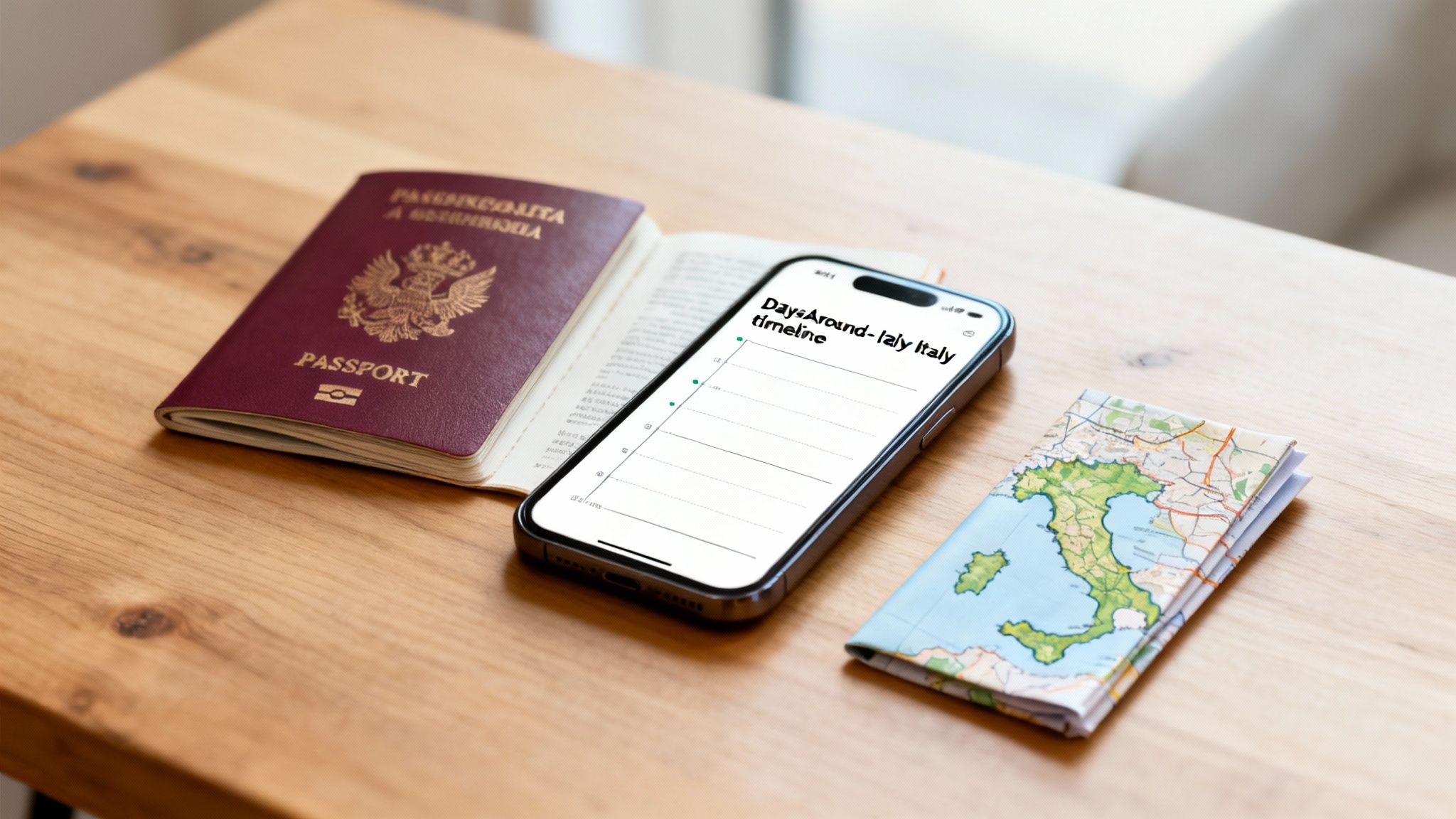
Starting your journey toward a long stay in Italy boils down to one crucial distinction: the difference between being a tourist and becoming a legal resident. Most travelers are familiar with the Schengen Area's 90/180-day rule, which allows stays in 29 European countries for up to 90 days within any 180-day period. However, this rule is strictly for temporary visits. If your Italian adventure is meant to last longer than three months, you must apply for a National Visa (Type D) from an Italian consulate before you travel. Overstaying a tourist visa is a serious error that can result in fines, deportation, and a ban from re-entering the Schengen Zone.
How DaysAround Can Help with Your Application
Italian consular officers require proof that you are a responsible traveler who respects visa rules. A well-documented travel history is powerful evidence. The DaysAround app was designed for this purpose, helping you create a private, on-device timeline of your international travels automatically.
- Privacy-First Country Tracker: DaysAround uses your phone's photo metadata to log your days in each country, building a verifiable timeline without using GPS or uploading data to the cloud. Your travel history remains secure on your device.
- Verifiable Travel History: You can generate a clear
countries visited mapand an exportable travel report. This data serves as concrete proof of your past compliance with visa regulations, strengthening your application. - Automatic Country Counter: The app functions as a personal
country counter, ensuring you always know the exact number of days you've spent in Italy and the wider Schengen Zone. Before applying, you can use our free Schengen Zone Calculator to manually verify past stays and ensure your record is compliant.
Short Stay Schengen Visa vs Long Stay National Visa
Understanding the difference between these two visa types is essential. The National 'D' Visa is not just an extended tourist visa; it is the first step toward legal residency in Italy.
| Feature | Short Stay (Schengen C Visa) | Long Stay (National D Visa) |
|---|---|---|
| Purpose | Tourism, short business trips, visiting family | Work, study, family reunification, elective residence |
| Maximum Duration | 90 days within any 180-day period | Over 90 days (typically 1 year, renewable) |
| Governing Rule | Schengen 90/180 Rule | Italian National Immigration Law |
| Application Point | Applied for before travel | Applied for at an Italian Consulate before travel |
| Post-Arrival Step | None required | Must apply for Permesso di Soggiorno within 8 days |
Choosing the Right Italian Long-Stay Visa
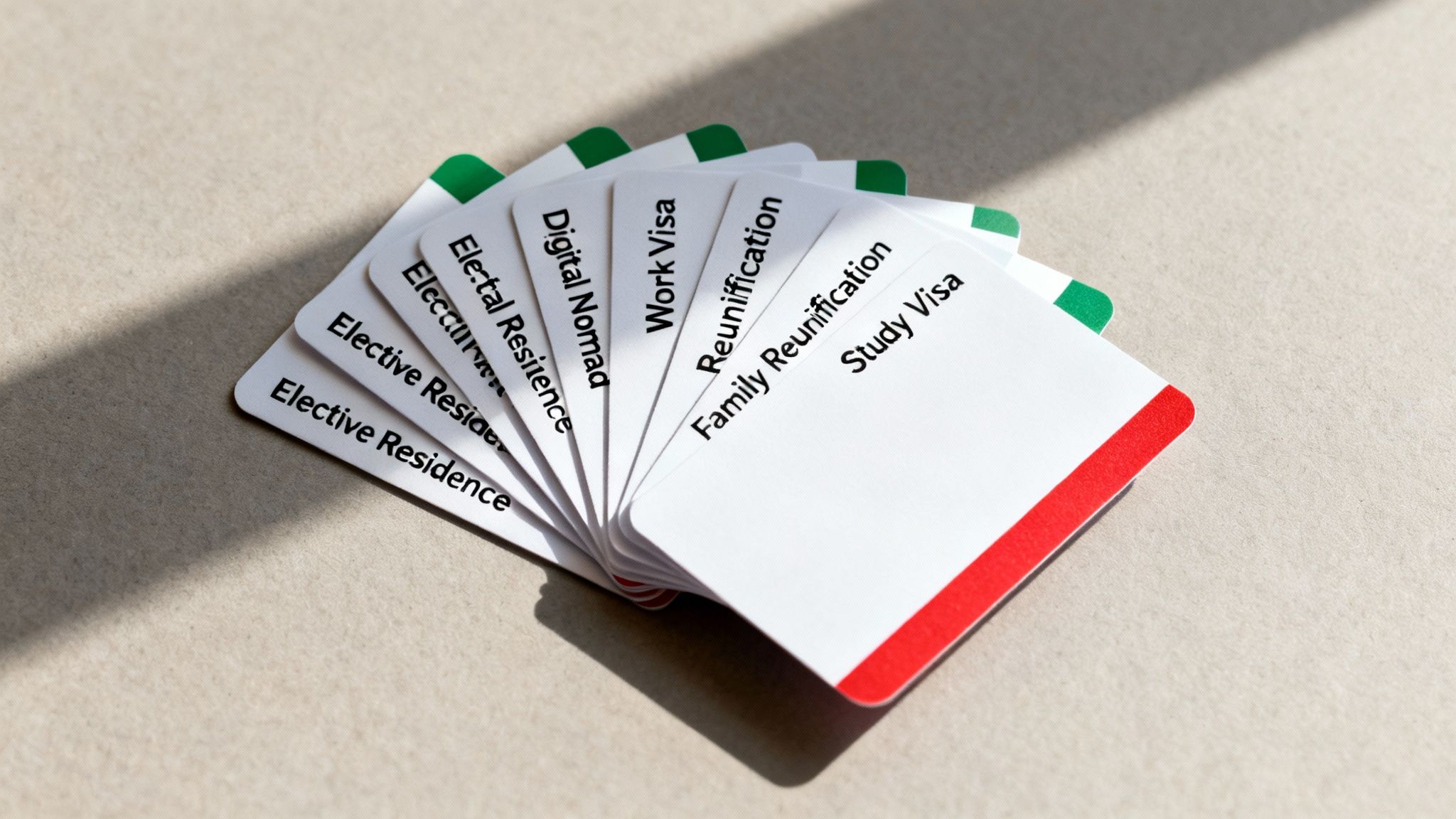
Selecting the correct long-stay visa for Italy is the most critical decision in your application process. Each visa is designed for a specific purpose and has unique financial and documentary requirements. Italy offers several pathways for non-EU citizens, whether you plan to live off passive income, work remotely, study, or join family. Assessing your personal and financial situation is the first step to identifying the right visa category.
How DaysAround Can Help with Visa Selection
A strong application relies on clear and accurate documentation. Consular officers value applicants who demonstrate responsibility and attention to detail.
- Build a Strong Applicant Profile: Using the DaysAround iOS app to maintain a private and verifiable timeline of your past travels shows you are a compliant traveler. This
travel history appgenerates an exportable record, which can strengthen any visa application by providing concrete evidence of your reliability.
For Financially Independent Individuals
The Elective Residence Visa (residenza elettiva) is designed for individuals who can support themselves without working in Italy. It is ideal for those with a consistent and reliable stream of passive income.
- Ideal Candidate: Retirees, investors, or individuals with significant income from pensions, rental properties, or investments.
- Financial Requirement: A minimum annual passive income of approximately €31,000 for a single applicant. This amount increases for a spouse or other family members.
- Key Restriction: You are strictly prohibited from performing any type of work in Italy on this visa.
For Remote Workers and Digital Nomads
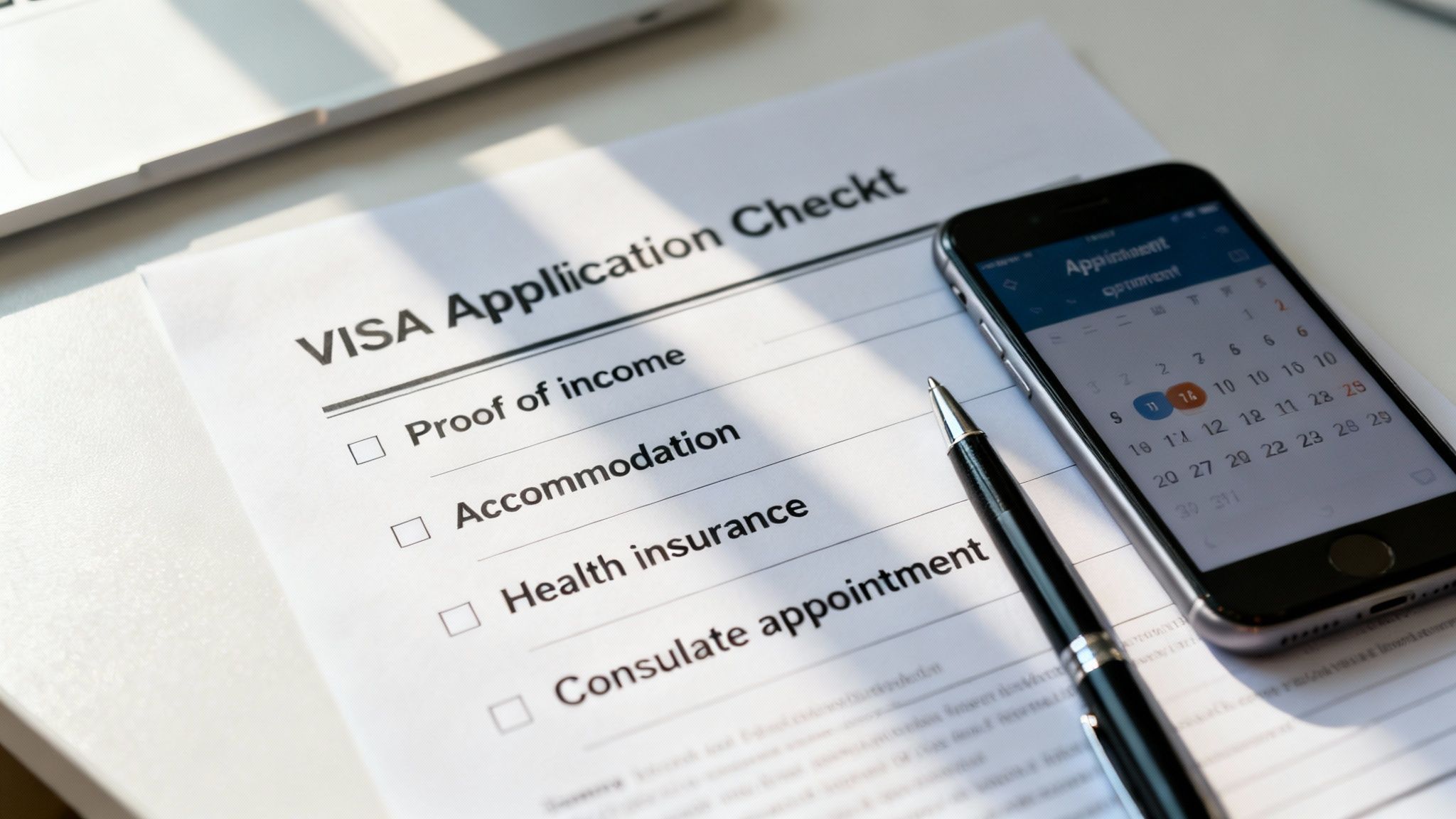
Italy introduced its official Digital Nomad Visa in 2024 for highly skilled professionals who are not tied to a physical office. General Digital Nomad Visa requirements often include proof of income, health insurance, and accommodation.
- Ideal Candidate: Freelancers, consultants, and remote employees in specialized fields like technology or marketing.
- Financial Requirement: The minimum income threshold is approximately €28,000 per year.
- Additional Needs: Applicants must demonstrate high qualifications, comprehensive health insurance, and proof of accommodation in Italy.
For Traditional Employment and Self-Employment
Work-specific visas are available for those who plan to work for an Italian company or start their own business. These visas are often subject to annual quotas set by the government’s Decreto Flussi (Flows Decree).
| Visa Type | Who It's For | Key Requirement |
|---|---|---|
| Work Visa (Lavoro Subordinato) | Individuals with a job offer from an Italian company. | A signed employment contract and a clearance document (Nulla Osta) from the employer. |
| Self-Employment (Lavoro Autonomo) | Entrepreneurs and freelancers establishing a business in Italy. | A comprehensive business plan and proof of sufficient funds to launch the venture. |
| Intra-Company Transfer | Employees of a multinational corporation transferring to its Italian branch. | Proof of current employment and an official transfer letter from the company. |
For Students and Family Members
Italy also provides visa options for academic pursuits and family reunification.
- Study Visa (Studio): For students enrolled in an accredited Italian institution for a course lasting more than 90 days. Requires an acceptance letter, proof of financial self-sufficiency, and health insurance.
- Family Reunification Visa (Ricongiungimento Familiare): For spouses, minor children, or dependent parents of a non-EU citizen who holds a valid Italian residence permit. The process is initiated by the family member in Italy, who must apply for the Nulla Osta.
A Step-by-Step Guide to the Visa Application Maze
Obtaining a long stay visa for Italy is a marathon that rewards careful planning and meticulous attention to detail. Breaking the process down into manageable steps transforms a seemingly overwhelming task into a clear plan. Every document, from bank statements to your travel history, must present a consistent and compelling case to the consulate.
How DaysAround Can Help with the Application Process
Accuracy is paramount. Any inconsistencies in your application, especially regarding travel dates, can raise red flags with consular officers.
- Ensure Accuracy: The DaysAround iOS app helps you avoid common pitfalls by creating a precise and verifiable travel history from your photo library. By generating a
countries visited mapand a detailed timeline, it ensures the dates on your application perfectly match your actual travel, presenting a professional and trustworthy profile.
Step 1: Building Your Document Dossier
Assembling your paperwork is the foundation of your application. A single missing document can result in rejection. While specific requirements vary by visa type and consulate, a core set of documents is universally needed.
- Completed Visa Application Form: Filled out accurately and signed.
- A Valid Passport: Must have at least two blank pages and be valid for at least three months beyond your visa's expiration date.
- Passport-Sized Photos: Recent and compliant with biometric standards.
- Proof of Financial Means: Bank statements, pension details, or investment records demonstrating you meet the income requirements.
- Proof of Accommodation: A registered rental contract (contratto di affitto) or property deed.
- Comprehensive Health Insurance: A policy with a minimum of €30,000 coverage valid across the Schengen Area.
- Travel History Documentation: An accurate record of your international travels.
Step 2: Snagging a Consulate Appointment
Once your documents are in order, you must book an appointment with the Italian consulate or embassy serving your jurisdiction. This can be a significant challenge.
- Book Way in Advance: Consular appointment slots are limited and fill up quickly. It is common to wait 3-4 months for an available opening.
- Get Ready for the Interview: The appointment often includes a brief interview. Be prepared to explain your reasons for moving to Italy, how you will support yourself, and where you intend to live.
Step 3: The Submission and the Long Wait
At your appointment, you will submit your application, provide biometric data (like fingerprints), and pay the visa fee. The processing time typically ranges from 30 to 120 days, but can be longer. Avoid booking non-refundable flights or making firm commitments until the visa is stamped in your passport.
Arriving in Italy and Securing Your Permit of Stay
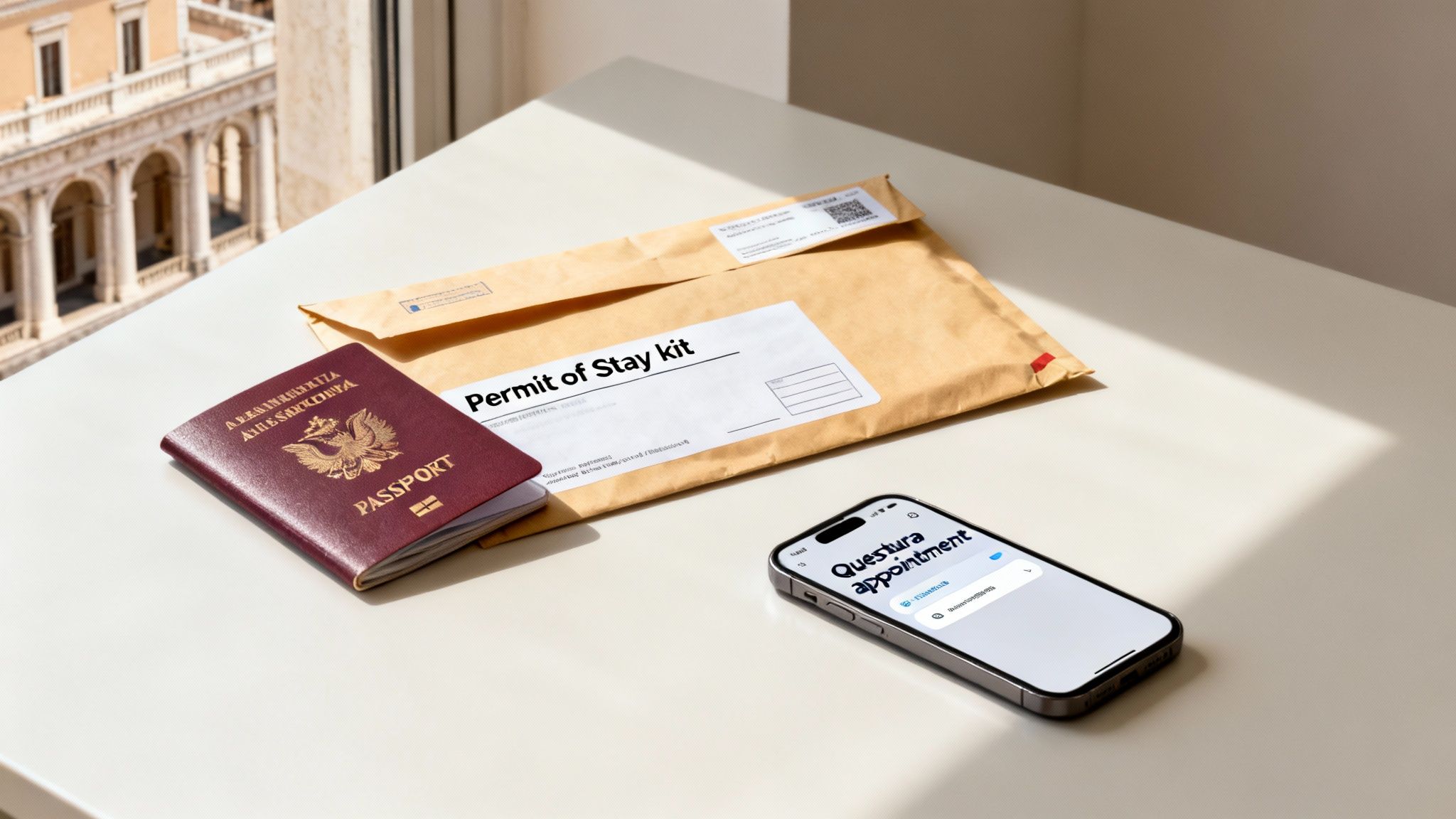
Your long-stay visa is your entry ticket to Italy, but the Permesso di Soggiorno (Permit of Stay) is the document that legally authorizes you to live there. Securing it is your top priority upon arrival. You have exactly eight working days from your arrival to begin the application process. Missing this deadline can create significant bureaucratic complications.
The 8-Day Countdown and the Kit Postale
Your first step is to visit a post office (Poste Italiane) with a "Sportello Amico" counter and request a “kit postale per il permesso di soggiorno.” This large envelope contains the necessary application forms. You must fill out the forms (which are in Italian), attach photocopies of your key documents (passport, visa, health insurance), and return the kit to the post office to pay the fees. You will receive a receipt (ricevuta) and an appointment date at the local police headquarters (Questura). This receipt serves as temporary proof of your legal status, so keep it safe.
How DaysAround Can Help You After Arrival
Establishing a clear record of your physical presence in Italy is crucial for your initial permit, future renewals, and potential tax residency questions.
- Build Your Residency Record: The DaysAround iOS app excels at this by automatically and privately creating a timeline of your days spent in Italy using your phone's photo metadata. This on-device
country counterprovides a verifiable record of your residency without invasive GPS tracking, giving you solid data to support your legal status.
Your Appointment at the Questura
On your scheduled day, you will visit the Questura with your original documents, passport, and post office receipt. Officials will take your fingerprints and process your application. After this, you must wait to be notified to return and collect your physical Permesso di Soggiorno card. The entire process, from arrival to holding the card, can take several months. Recent Italian immigration statistics show Italy issued 169,000 new residence permits, with 61% for family reunification, highlighting the competitive nature of the system.
Managing Your Long-Term Stay and Tax Residency
Receiving your long-stay visa for Italy and Permesso di Soggiorno is the start of your life in Italy, which includes understanding your financial and legal responsibilities, particularly concerning taxes. The number of days you spend in the country each year directly impacts your tax status.
The 183-Day Rule and Becoming an Italian Tax Resident
The critical number in Italian tax law is 183. If you are physically present in Italy for more than 183 days within a calendar year, you are generally considered a tax resident. This means you are liable for Italian taxes on your worldwide income, not just income earned in Italy. Failing to accurately track your days can lead to significant tax liabilities.
How DaysAround Can Help with Tax and Visa Compliance
Maintaining a precise count of your days is non-negotiable for immigration compliance and tax obligations. DaysAround was built to be a private and automatic tax residency tracker.
- Automatic Day Counting: The app uses your photos' metadata to log every day you spend in Italy, creating a precise
days per countrycount on your device. - Privacy-First Design: Your travel timeline and location data never leave your phone. There is no cloud sync or GPS tracking, ensuring your privacy.
- Data for Renewals and Taxes: You can easily export your travel data to share with immigration officials for visa renewals or with a tax advisor for accurate filings. This proves your physical presence and helps you stay compliant.
- Schengen Zone Management: The app also functions as a
schengen 90/180 tracker, helping you manage visits to other Schengen countries. For manual planning, you can use our Schengen Zone Calculator Free.
Learning the tax and visa benefits of tracking your travel history is crucial for a smooth long-term stay. To integrate more easily, learning the best way to learn Italian will be invaluable for official appointments and daily life.
Frequently Asked Questions About Italy's Long-Stay Visas
Can I work in Italy on an Elective Residence Visa?
No. The Elective Residence Visa is strictly for individuals who can financially support themselves without working. Any form of employment, including remote work for foreign clients, is prohibited and can lead to the revocation of your visa. For work purposes, you must apply for a specific work, self-employment, or Digital Nomad visa.
What is the minimum income for an Italian long-stay visa?
Income requirements vary by visa type and are subject to change. Always verify the latest figures with your local Italian consulate. As a general guide:
- Elective Residence Visa: Approximately €31,000 per year in passive income for a single applicant.
- Digital Nomad Visa: Around €28,000 per year from remote work activities.
- Work Visas: Tied to a specific job offer that meets Italian labor and minimum wage standards.
How long does the visa application process take?
After submitting your application at the consulate, expect a processing time of 30 to 120 days. The exact duration depends on the visa type, the consulate's workload, and the complexity of your case. It is advisable to start the process at least four to six months before your intended travel date.
Can I travel to other Schengen countries with a long-stay visa?
Yes. Once you have your Italian National 'D' Visa and your Permesso di Soggiorno, you are free to travel to other countries in the Schengen Zone. However, you must adhere to the 90/180-day rule for these trips, meaning you can stay in other Schengen countries for a maximum of 90 days within any 180-day period.
How can I track my days in the Schengen Zone to stay compliant?
The easiest way is to use an automatic tracker. The DaysAround iOS app functions as a private schengen 90/180 tracker by using your phone's photo library to log your entries and exits from different countries automatically. This helps you avoid accidental overstays. For manual checks, you can use a free online tool like our Schengen Zone Calculator.
What is the biggest mistake to avoid when applying?
The most common mistake is submitting an incomplete or inconsistent application. All documents must be accurate, current, and aligned with your chosen visa's requirements. A close second is underestimating the time required for the entire process, from gathering documents to waiting for the final decision.
Do I need to speak Italian to get a long-stay visa?
While not always a strict requirement for the initial visa application, a basic knowledge of Italian is highly recommended. It will make essential processes, like appointments at the post office and the Questura, much smoother. Language proficiency may become a formal requirement for future renewals or citizenship applications.
Sources
This guide is based on information from official government sources and reputable immigration experts. Always consult official channels for the most current regulations and requirements for your long-stay visa for Italy.
- Italian Ministry of Foreign Affairs (Visto per l'Italia): The official government portal for all visa information, including document checklists and application forms.
- Polizia di Stato (State Police): The official source for information regarding the Permesso di Soggiorno application process after your arrival in Italy.
- Bright!Tax - Retire in Italy Guide: A comprehensive resource explaining the financial and tax implications for expatriates moving to Italy, particularly regarding the Elective Residence Visa.
Ready to manage your long stay in Italy with confidence? DaysAround is the privacy-first app that helps you automatically track your days per country, manage your Schengen Zone compliance, and maintain a secure travel history for visa renewals and tax purposes. Download the DaysAround iOS App to build your private travel timeline today.
Free Schengen Calculator
Track your 90/180 day limit in the Schengen Zone. Plan future trips or check your current status.